
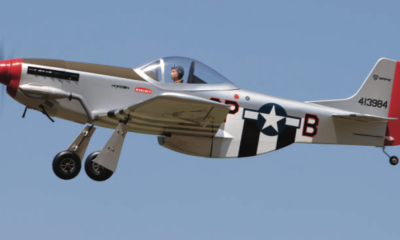

As a rule, an airplane will fly in a straight line whenever the wings are level. If a crosswind exists, the plane will “crab” (point) into...
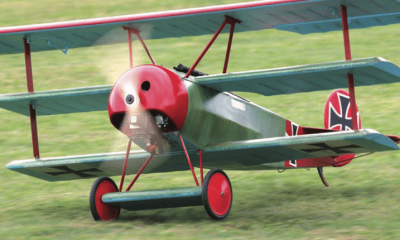

There are two types of tail-dragger landings: 3-point (stall landings) and 2-point (wheel landings). The type of model you fly and the wind conditions dictate the...
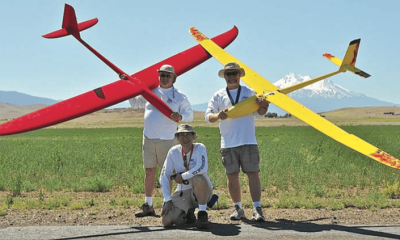

Excerpt from the cross-country log for Team Dust Devils: “Montague is renowned for massive thermals … the kind that cause you to fear for the loss...
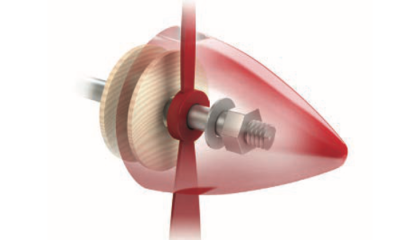

I have had problems with plastic spinners slipping off, and this is one way I was able to stop that issue. First, cut two 1/32 soft...


Dayton, Ohio is the home of the sprawling Museum of the United States Air Force—a mecca for aviation enthusiasts. The museum opens its doors to nearly...
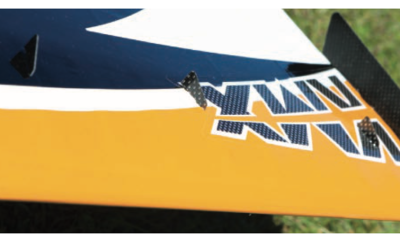

Though you might think that vortex generators (VG) are just another neat bit of “bling” to add to your airplane for increased eye appeal, the carbon-fiber...
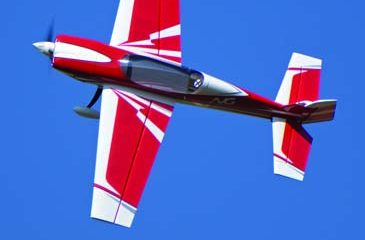

When flying an RC airplane, precision and control are paramount. One of the key adjustments available in modern RC transmitters is “exponential,” often abbreviated as “expo.”...
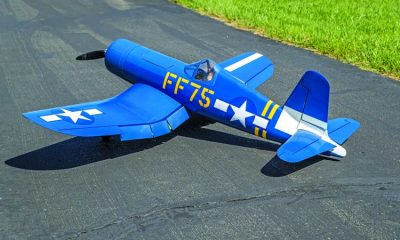

For my giant-scale Corsair, I needed to cut vinyl stripes to fit vertically around the rear fuselage. Because of the complex cross-sectional shape—a sharply tapered, narrow...


Drilling Vent Holes When assembling a built-up wood model, I find it helps to drill vent holes where iron-on covering is applied over a sealed assembly,...
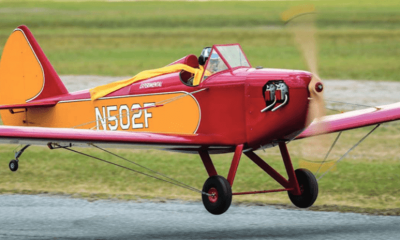

It has long been said that the key to a good landing is a good approach to the runway, i.e., one that requires few corrections. Actually,...


F5F Hellcat Lou DiMarco, Lancaster, Pennsylvania This model started life as a Hangar 9 ARF with a full makeover inspired by a F6F on display at...
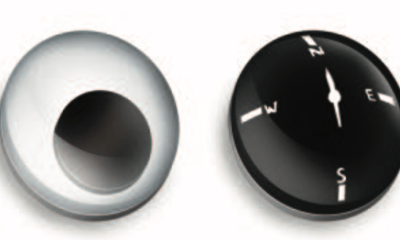

Adding small details to your aircraft gives it that extra personal finished touch. One such detail is adding cockpit instrumentation that almost looks like the real...